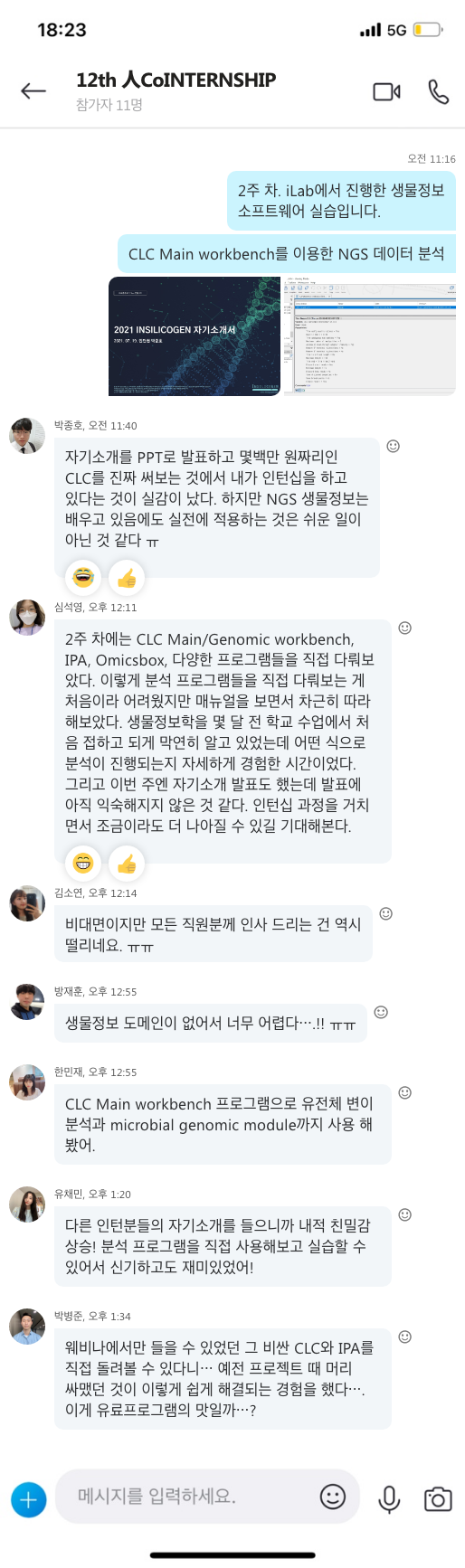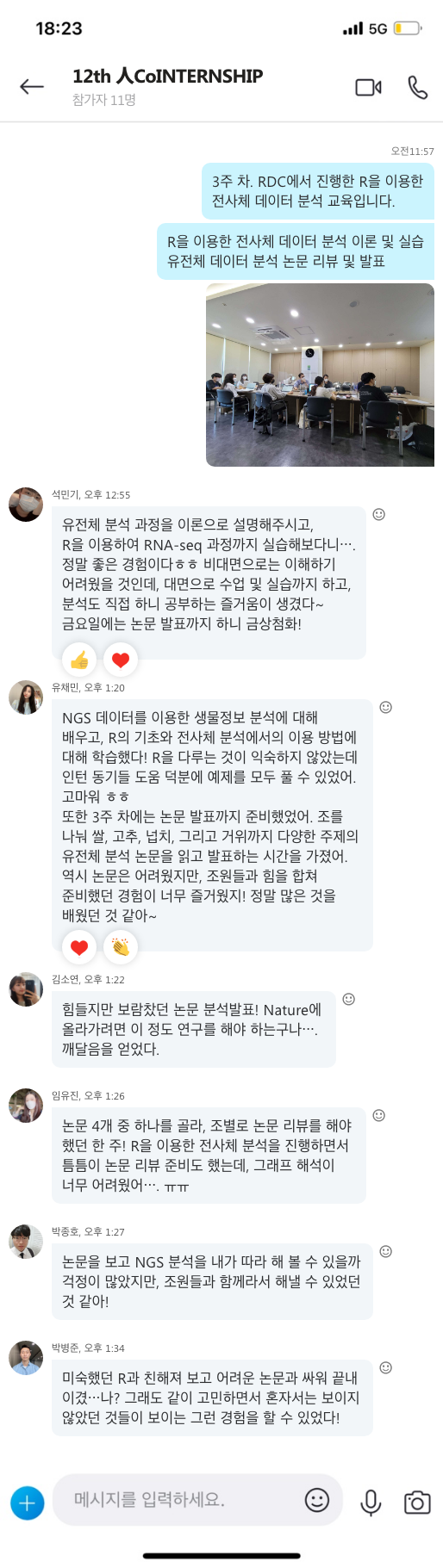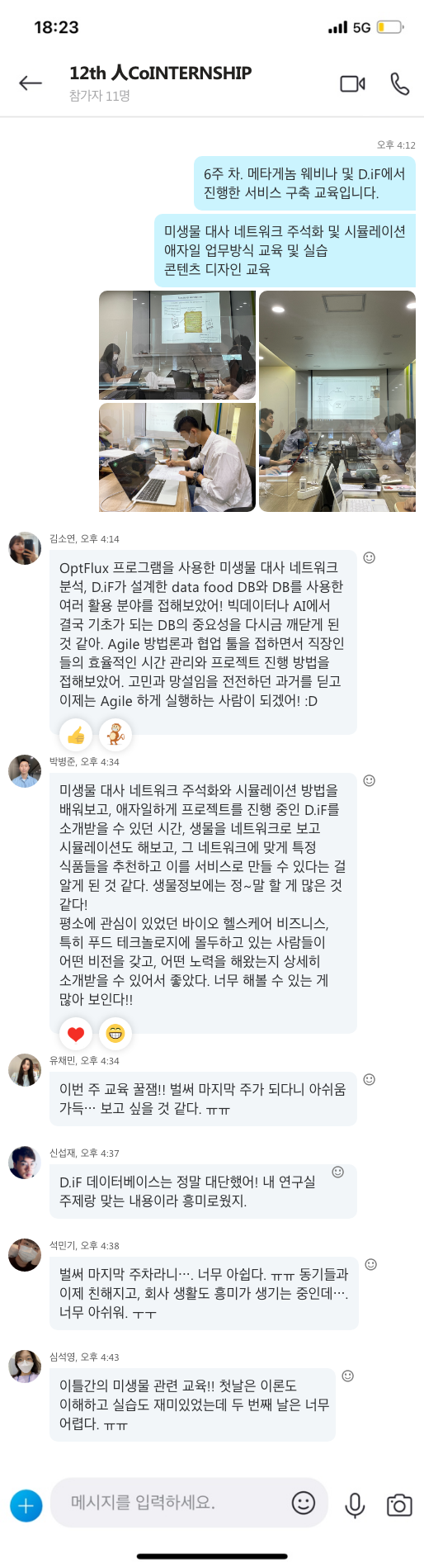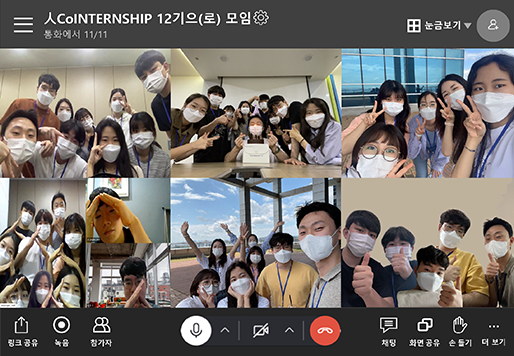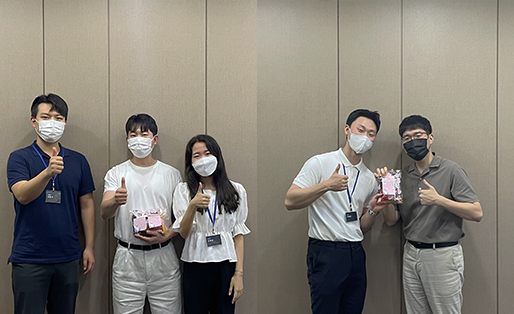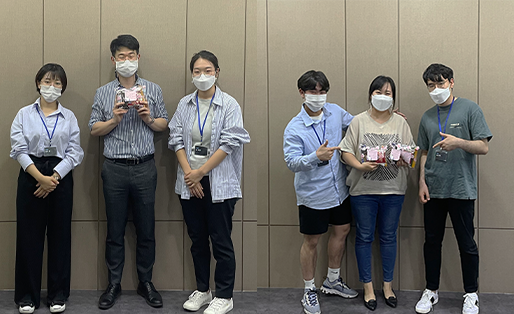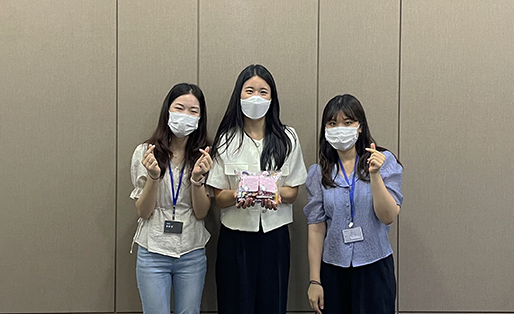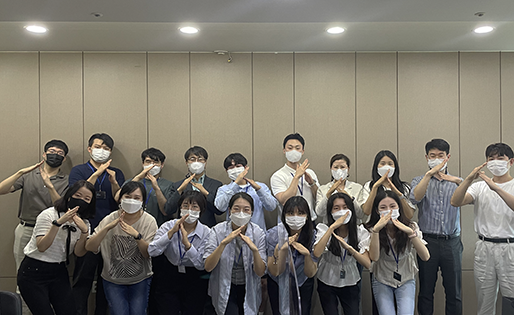
난 2월 26일(금) Systems Biology 전문 소프트웨어 개발회사인 Ariadne Genomics사에서 Anton Yuryev 박사가 내한하였습니다. Anton Yuryev 박사는 이번 세미나에서 nutrigenomics, toxicogenomics와 biomarker발굴 연구에 응용할 수 있는 Pathway Studio 프로그램의 다양한 분석 활용에 대해 소개해주셨습니다.

 세미나는 26일 하루 동안 서울과 대전 두 곳에서 바쁘게 진행되었습니다. 먼저 오전에 서울대학교 약학대학에서는 서울 근교 지역에서 여러 분들이 참석을 해주셨습니다. 서울대학교 분석약학실의 권성원 교수님의 Anton박사 약력 소개와 이어 (주)인실리코젠의 Codes팀 박준형 팀장님께서 이날 세미나의 취지에 대해 말씀해 주시는 것으로 세미나가 시작되었습니다. Anton박사는 Pathway Studio에 대한 간략한 소개와 skin care에 대한 새로운 idea, 다양한 물질에 대한 toxicity mechanism, drug action mechanism, disease pathway 등 다양한 case study를 Pathway Studio 이용하여 어떻게 분석할 수 있는지에 대해 설명해 주셨습니다.

사용자 삽입 이미지
1시간 30분간의 서울에서의 세미나 일정을 마치고 간단하게 점심을 먹고 대전으로 향했습니다. 점심을 먹는 동안에는 김연아 선수의 프리스케이팅 경기가 있었습니다. Anton Yuryev 박사님께 김연아 선수에 대한 소개도 해드리고 함께 경기를 지켜보았습니다. 김연아 선수의 좋은 성적으로 기분 좋게 대전으로 출발할 수 있었던 것 같습니다.

 전에서는 한국생명공학연구원에서 세미나가 진행되었는데 한국생명공학연구원분들과 KAIST 그리고 멀리 부산에서도 참석하여 함께 자리를 빛내주셨습니다. 세미나에 대한 소개를 시작으로 Anton Yuryev 박사의 세미나가 시작되었습니다. 세미나는 서울에서와 마찬가지로 Pathway Studio에 대한 간략한 소개와 drug epositioning and combination therapy design이라는 주제에 중점을 둔 case study 내용으로 진행되었습니다. 세미나가 끝나고 멀리 있어서 자주 찾아뵙지 못하는 분들과 반갑게 대화를 나누는 시간도 잠시 가졌습니다.

사용자 삽입 이미지
  렇게 26일의 서울과 대전의 바쁜 일정을 마치고 27일(토)에는 Anton Yuryev 박사께서 직접 저희 회사에 방문해 주셔서 내부 세미나를 진행해주시기도 하였습니다. 한층 더 업그레이드된 ResNet Database curator, MedScan 기술, 그리고 Pathway Studio의 API에 대해 Training을 받았습니다. 저희 회사에서 앞으로 Pathway Studio 컨설팅을 하는데 있어서 도움이 될 수 있는 내용에 대해 배우는 중요한 시간이 되었습니다.

사용자 삽입 이미지
  다시 한 번 바쁘신 와중에도 지난 26일(금)에 세미나에 참석해 주신 모든 분들께 진심으로 감사드리며, 이번에 개최된 세미나가 많은 분들께 유익한 시간이 되었기를 바랍니다. 앞으로도 저희 (주)인실리코젠에서는 세미나를 진행함에 있어 부족한 점들을 지속적으로 보완하여 세미나에 참여하시는 모든분들께 보다 새롭고 다양한 정보를 제공할 수 있도록 노력하겠습니다. 발표 내용이나 PathwayStudio에 대한 문의사항이 있으시면 언제든지 대표전화(031-278-0061) 또는 Codes팀(codes@insilicogen.com)으로 문의하여 주십시오.

감사합니다.


Posted by quipu

2010/03/09 17:46 2010/03/09 17:46

연재 순서

   1. Assembly
   2. Variation study
   3. Expression study
   4. Epigenomics
   5. Genome Annotation
   6. Next Generation Bioinformatics
   7. Data Management for web 2.0 Era
   8. Semantic Network for Integrated Biology Data
   9. Gene Network Discovery by Text-mining
  10. Centralization for High-throughput Data Analysis

이번주 연재에서는 Next Generation Sequencing의 세 번째 Application으로 유전자의 염기서열에는 변화를 주지 않으면서 유전자의 발현 등에 영향을 주어 개체의 차이를 나타내게 하는 현상에 대해 연구하는 Epigenomics의 분석 방법에 대해 알아보겠습니다.

2-3. Epigenomics


 2003년 인간 유전체에 대한 서열해독 이후로, 유전체에 대한 기능적 분석에 연구가 증가하면서, 이른바 post genomics시대가 도래하고 유전체 연구와 함께 이들의 발현과 작용에 대한 연구들이 활발해 지고 있다.  Epigenetics라는 분야는 이러한 흐름을 주도하는 분야로서, 유전되는 DNA서열로만 설명이 불가능한 부분의 해석을 돕고, 보다 발전적인 유전체 연구를 목적으로 진행되고 있다. Epigenetics에서 가장 주요하게 여겨지는 부분은 유전자의 발현으로서, 유전자가 유전체에 존재하지만, 발현여부에 따라 세포내 역할이 달리지고, 달라진 발현양상은 유전물질처럼 후대에게도 영향을 주는 것이다. 이는 기존의 유전체가 답하지 못했던 물음에 실마리를 제공하면서, 유전체를 좀 더 잘 이해하기 위한 수단으로 이용되고 있다[1].

사용자 삽입 이미지
그림 1. DNA methylation에 의한 유전자 발현 및 억제

 Epigenomic study의 연구대상으로 가장 대표되는 것이 DNA-methylation이다. DNA strand에서 CpG island가 있고 이중 cytosine이 5-methyl cytosine으로 modification 되는 현상이다. 이러한 methylation 현상은 유전체 전반에 걸쳐 일어나는 것으로 유전자의 단백질 코딩 영역이나 전사 조절 부위에서 관찰이 되며 이는 곧 유전자의 발현에 관여하게 된다[2]. 대표적인 예로 X-염색체 inactivation을 통한 유전자 dosage 조절이나 발달과정에서 필요한 유전자들의 발현을 성장 시기에 맞춰 선택적으로  조절 하는 것이 이에 해당 한다. 뿐만 아니라 외부의 retro virus나 transposon의 발현 억제와 cancer에 의한 repressor 유전자의 inactivation 기작 역시 DNA methylation을 통해서 이루어지고 있어 질병과 관련하여 유전체 연구에서 중요하게 다뤄지고 있다. 

2-3-1. Methylation Analysis


 Genome methylation을 알아보기 위한 기존의 방법은 Methylation Sensitive Restriction Enzyme (MSRE)을 이용하거나,  살펴보고자 하는 특정 영역에 해당하는 프라이머를 작성하여 PCR을 수행 하는 방법 등이 이용되었다. 그러나 NGS 기술의 발달로 epigenetics 분야의 연구 또한 대량의 functional gene study가 일반화 되어가고 있다. 가장 대중적인 방법은 genomic DNA를 추출하여 bisulfate를 처리한 후에 NGS를 통한 대량 sequencing을 수행하는 것이다(그림 2).

사용자 삽입 이미지
그림 2. Genomic DNA의 bisulfate처리로 methylation 여부를 확인.
Methylation 되어 있지 않은 cytosines은 bisulfite 처리로 uracil로 바뀌게 되고 반면,
methylation 되어 있는 cytosines에는 변화가 없어 genome상의 서열변화로 methylation 여부를 확인한다[3].

시퀀싱 된 NGS reads는 reference assembly를 통해 유전체 내의 전체적인 5-methyl cytosine의 분포를 확인 하는데 이용하게 된다. 이러한 분석은 ABI-SOLiD, Illumina의 Solexa 그리고 Roche 454 모두 가능한 플랫폼이긴 하나 long reads 시퀀싱을 수행하는 Roche 454가 조금 더 유용하게 이용되고 있다[3].

다음 연재에서는  단백질에 binding된 DNA 서열을 분리하여 NGS 방식의 시퀀싱 통해 binding site를 동정하는 방법인 CHIP-Seq 분석 방법에 대해 알아보겠습니다.
많은 관심 부탁드립니다.


참고문헌


 1. Horner DS, Pavesi G, Castrignanò T, De Meo PD, Liuni S, Sammeth M, Picardi E, Pesole G. (2009) Bioinformatics approaches for genomics and post genomics applications of next-generation sequencing. Brief Bioinform. [Epub ahead of print]
 2. Weber M, Schubeler D. (2007) Genomic patterns of DNA methylation: targets and function of an epigenetic mark. Curr Opin Cell Biol. 19, 273-80
 3. Roch 454 : Applications - Epigenetics
 (http://www.454.com/applications/ChIP-seq-methylation-epigenetics.asp)
 4. Illumina : Applications - Gene Regulation and Epigenetic Analysis
 (http://www.illumina.com/applications.ilmn#dna_protein_interaction_analysis_chip_seq)
 5. Appied Biosystems : Applications & Technologies - The SOLiD System
 (http://www3.appliedbiosystems.com/AB_Home/applicationstechnologies/SOLiD-System-Sequencing-A/index.htm)
 6. Kel, A., Voss, N., Jauregui, R., Kel-Margoulis, O. and Wingender, E. (2006) Beyond microarrays: Find key transcription factors controlling signal transduction pathways BMC Bioinformatics. 7, S13


Posted by quipu

2010/03/08 11:26 2010/03/08 11:26

연재 순서

   1. Assembly
   2. Variation study
   3. Expression study
   4. Epigenomics
   5. Genome Annotation
   6. Next Generation Bioinformatics
   7. Data Management for web 2.0 Era
   8. Semantic Network for Integrated Biology Data
   9. Gene Network Discovery by Text-mining
  10. Centralization for High-throughput Data Analysis

이번 연재에서는 Next Generation Sequencing의 두 번째 Application인 Expression study의 마지막 내용으로 한정적인 유전자를 좀 더 다양하게 활용할 수 있는 Alternative splicing 분석에 대해 알아보겠습니다.

2-2-7. Alternative splicing Analysis


 한정적인 유전자를 좀 더 다양하게 활용하기 위한 방법으로 alternative splicing이 이뤄지고 있다[20]. 그러나 어느 유전자에서 어느 정도 alternative splicing이 이뤄지는지는 명확하게  밝혀진 바가 없다. NGS 이전 시대의 ESTs와 기타 실험적인 분석으로 약 72%에 해당하는 human 유전자가 alternative splicing을 하는 것으로 알려졌었으나[21],

 최근 NGS를 이용한 분석으로 약 94%의 유전자가 해당하는 것으로 밝혀졌다[20]. 뇌, 간, 근육, 폐의 조직으로부터 분석한 결과 2개 이상의 mRNA를 만들어 내는 유전자가 92-94%에 해당한다는 것이다. 이후 이를 뒷받침하는 자료로 15개의 조직으로부터 분석한 결과 94% 유전자가 alternative splicing이 이뤄진다고 발표 되었다[22].

 현재 까지 밝혀진 alternative form은 대부분 8가지 형태로 분류 되고 있다(그림 10)[20]. 가장 흔한 형태는 exon이 카세트 형태로 들어갔다 나갔다 하는 exon skipping이며, 그 외에도 intron이 exon처럼 읽혀지는 형태와 UTR 영역의 variation도 많은 부분 차지한다. 이러한 형태는 조직, 발달 단계, 그리고 기타 환경적인 자극에 의한 대처로 서로 다른 형태의 mRNA를 발현하여 세포내 항상성을 유지하는 것으로 보고 있다[20].

 실제 분석을 위해서는 위에서 언급 했듯이 다양한 조건에서 다양한 형태로 발현되므로 이를 반영하여 최대한 다양한 조건의 mRNA를 수집하여 이를 genome과 mapping하고 패턴을 분석하는 것이다. 그러기 위해서는 short-reads 보다는 long reads 플랫폼을 이용한 mRNA 시퀀싱이 좀 더 많은 정보를 담고 있으므로 유용하다. 이후 reference assembly를 통해 유전자 영역에서의 transcriptom alignment 형태를 분석하여 alternative 분석을 수행한다(자세한 분석 방법은 2-4-1 C. Alternative splicing analysis 참조).

사용자 삽입 이미지
그림 10. Alternative splicing 형태[20].


다음주 연재에서는 유전자의 염기서열에는 변화를 주지 않으면서 유전자의 발현 등에 영향을 주어 개체의 차이를 나타내게 하는 현상에 대해 연구하는 Epigenomics의 분석 방법에 대해 알아보겠습니다.

많은 관심 부탁드립니다.


참고문헌

1. Mortazavi A, Williams BA, McCue K, Schaeffer L, Wold B. (2008) Mapping and quantifying mammalian transcriptomes by RNA-Seq. Nat Methods. 7, 621-628.
2. Fei Z, Tang X, Alba RM, White JA, Ronning CM, Martin GB, Tanksley SD, Giovannoni JJ. (2004) Comprehensive EST analysis of tomato and comparative genomics of fruit ripening. Plant J. 40, 47–59
3. Rensink WA, Lee Y, Liu J, Iobst S, Ouyang S, Buell CR. (2005) Comparative analyses of six solanaceous transcriptomes reveal a high degree of sequence conservation and species-specific transcripts. BMC Genomics. 6, 124
4. Ronning,C.M. et al. (2003) Comparative analyses of potato expressed sequence tag libraries. Plant Physiol. 131, 419–429
5. Guo J, Zhu P, Wu C, Yu L, Zhao S, Gu X. (2003) In silico analysis indicates a similar gene expression pattern between human brain and testis. Cytogenet Genome Res. 103, 58-62
6. Benjamini, Y., Daniel Yekutieli. (2001) The control of the false discovery rate in multiple hypotheses testing under dependency. Annal. Stat. 4(29), 1165–1188
7. Tsai CA, Hsueh HM, Chen JJ. (2003) Estimation of false discovery rates in multiple testing: application to gene microarray data. Biometrics. 59, 1071-81
8. Audic S, Claverie JM. (1997) The significance of digital gene expression profiles. Genome Res. 7, 986–995
9. Roche 454 : Products & Solutions - Multiplexing
(http://www.454.com/products-solutions/experimental-design-options/multiplexing.asp)
10. Tatusov RL, Koonin EV, Lipman DJ. (1997) A genomic perspective on protein families. Science. 278, 631-637
11. Kato T, Murata Y, Miura K, Asai K, Horton PB, Koji T, Fujibuchi W. (2006) Network-based de-noising improves prediction from microarray data, BMC Bioinformatics. 7, S4
12. Noh SJ, Lee K, Paik H, Hur CG. (2006) TISA: tissue-specific alternative splicing in human and mouse genes. DNA Res. 5, 229-243
13. Zeeberg BR, Feng W, Wang G, Wang MD, Fojo AT, Sunshine M, Narasimhan S, Kane DW, Reinhold WC, Lababidi S, Bussey KJ, Riss J, Barrett JC, Weinstein JN. (2003) GoMiner: a resource for biological interpretation of genomic and proteomic data, Genome Biol. 4, R28
14. GeneSpring GX : Products & Services - GeneSpring GX Software
(http://www.chem.agilent.com/en-US/products/software/lifesciencesinformatics/genespringgx/pages/default.aspx)
15. Wingender E, Chen X, Hehl R, Karas H, Liebich I, Matys V, Meinhardt T, Prüss M, Reuter I, Schacherer F. (2000) TRANSFAC: an integrated system for gene expression regulation. Nucleic Acids Research. 28, 316-319
16. PathwayStudio : Products-pathway Studio
(http://www.ariadnegenomics.com/products/pathwaystudio/)
17. Eveland AL, McCarty DR, Koch KE. (2007) Transcript profiling by 3'-untranslated region sequencing resolves expression of gene families. Plant Physiol. 146, 32-44.
18. Torres TT, Metta M, Ottenwälder B, Schlötterer C. (2008) Gene expression profiling by massively parallel sequencing. Genome Res. 1, 172-7.
19. Vega-Arreguín JC, Ibarra-Laclette E, Jiménez-Moraila B, Martínez O, Vielle-Calzada JP, Herrera-Estrella L, Herrera-Estrella A. (2009) Deep sampling of the Palomero maize transcriptome by a high throughput strategy of pyrosequencing. BMC Genomics. 10, 299.
20. Wang ET, Sandberg R, Luo S, Khrebtukova I, Zhang L, Mayr C, Kingsmore SF, Schroth GP, Burge CB. (2008) Alternative isoform regulation in human tissue transcriptomes. Nature. 2456, 70-76.
21. Johnson JM, Castle J, Garrett-Engele P, Kan Z, Loerch PM, Armour CD, Santos R, Schadt EE, Stoughton R, Shoemaker DD. (2003) Genome-wide survey of human alternative pre-mRNA splicing with exon junction microarrays. Science. 302, 2141-2144.
22. Ledford H. (2008) Human genes are multitaskers. Nature. 456, 9.
23. CLC Genomics Workbench: RNA-Seq analysis
(http://www.clcbio.com/index.php?id=1330&manual=RNA_Seq_analysis.html)


Posted by quipu

2010/03/05 08:45 2010/03/05 08:45
Response
1 Trackback , 1 Comment
RSS :
http://insilicogen.com/blog/rss/response/52

연재 순서

   1. Assembly
   2. Variation study
   3. Expression study
   4. Epigenomics
   5. Genome Annotation
   6. Next Generation Bioinformatics
   7. Data Management for web 2.0 Era
   8. Semantic Network for Integrated Biology Data
   9. Gene Network Discovery by Text-mining
  10. Centralization for High-throughput Data Analysis

이번 연재에서는 Next Generation Sequencing의 두 번째 Application인 Expression study 중에 유전자와 엑손의 발현 및 발현된 유전자의 각종 변이 등을 한 번에 연구할 수 있는 RNA-Seq 분석에 대해 알아보겠습니다.

2-2-6. RNA-Seq Analysis


 Serial Analysis of gene Expression(SAGE), Cap Analysis of gene expression (CAGE), 그리고 Massively Parallel Signature sequencing(MPSS)은 특정 유전자의 발현 양 정보를 얻고자 하는 목표로 수행되는 방법들이다. 이러한 방법들은 많이 이용되고 있지만 Sanger 방법에 바탕을 둔 것으로 높은 비용과 짧은 reads는 reference 서열에 유일하게 매핑하기 힘들다는 문제점을 가지고 있다. 이러한 문제점들을 극복하기 위한 방법으로는 유전자와 엑손의 발현 및 발현된 유전자의 각종 변이 등을 한 번에 연구할 수 있는 RNA-Seq기술이 있다[1].

표 1에서 보는 것과 같이 RNA-Seq을 분석 할 수 있는 프로그램에는 여러 가지 소프트웨어가 있는데 그 중에 CLC Genomics Workbench는 annotation된 Reference 유전체 서열과 mRNA 시퀀싱 reads를 바탕으로 새로운 엑손의 발굴뿐만 아니라 유전자 발현 레벨을 계산할 수 있다. RNA-Seq 분석은 몇 가지 단계로 수행된다. 먼저, Reference 서열에서 모든 유전자를 추출한다. 이 때 유전자 서열의 다른 annotation들은 보존된다[23].

사용자 삽입 이미지
다음으로 영역 주변의 엑손-엑손 경계를 추출한다. 그 다음으로 모든 엑손-엑손 junctions plus에 대한 Reference assembly가 수행된다. 이 assembly로부터 각각의 유전자에 대해 발현 수치가 계산되고 putative exon을 확인할 수 있다. 발현 수치는 RPKM(reads per kilobase of exon model per milion mapped reads)방법으로 측정된다(그림 9).

사용자 삽입 이미지
그림 9. RNA_seq analysis.
(a) exon-exon junction+gene 서열을 reference 서열로 한다.
(b) NGS reads의 reference assembly를 통한 alignment를 통해
새로운 각 엑손 단위 혹은 유전자 단위의 발현양을 확인한다.


다음 연재에서는 한정적인 유전자를 좀 더 다양하게 활용할 수 있는 Alternative splicing 분석에 대해 알아보겠습니다. 많은 관심 부탁드립니다.


참고문헌


1. Mortazavi A, Williams BA, McCue K, Schaeffer L, Wold B. (2008) Mapping and quantifying mammalian transcriptomes by RNA-Seq. Nat Methods. 7, 621-628.
2. Fei Z, Tang X, Alba RM, White JA, Ronning CM, Martin GB, Tanksley SD, Giovannoni JJ. (2004) Comprehensive EST analysis of tomato and comparative genomics of fruit ripening. Plant J. 40, 47–59
3. Rensink WA, Lee Y, Liu J, Iobst S, Ouyang S, Buell CR. (2005) Comparative analyses of six solanaceous transcriptomes reveal a high degree of sequence conservation and species-specific transcripts. BMC Genomics. 6, 124
4. Ronning,C.M. et al. (2003) Comparative analyses of potato expressed sequence tag libraries. Plant Physiol. 131, 419–429
5. Guo J, Zhu P, Wu C, Yu L, Zhao S, Gu X. (2003) In silico analysis indicates a similar gene expression pattern between human brain and testis. Cytogenet Genome Res. 103, 58-62
6. Benjamini, Y., Daniel Yekutieli. (2001) The control of the false discovery rate in multiple hypotheses testing under dependency. Annal. Stat. 4(29), 1165–1188
7. Tsai CA, Hsueh HM, Chen JJ. (2003) Estimation of false discovery rates in multiple testing: application to gene microarray data. Biometrics. 59, 1071-81
8. Audic S, Claverie JM. (1997) The significance of digital gene expression profiles. Genome Res. 7, 986–995
9. Roche 454 : Products & Solutions - Multiplexing
(http://www.454.com/products-solutions/experimental-design-options/multiplexing.asp)
10. Tatusov RL, Koonin EV, Lipman DJ. (1997) A genomic perspective on protein families. Science. 278, 631-637
11. Kato T, Murata Y, Miura K, Asai K, Horton PB, Koji T, Fujibuchi W. (2006) Network-based de-noising improves prediction from microarray data, BMC Bioinformatics. 7, S4
12. Noh SJ, Lee K, Paik H, Hur CG. (2006) TISA: tissue-specific alternative splicing in human and mouse genes. DNA Res. 5, 229-243
13. Zeeberg BR, Feng W, Wang G, Wang MD, Fojo AT, Sunshine M, Narasimhan S, Kane DW, Reinhold WC, Lababidi S, Bussey KJ, Riss J, Barrett JC, Weinstein JN. (2003) GoMiner: a resource for biological interpretation of genomic and proteomic data, Genome Biol. 4, R28
14. GeneSpring GX : Products & Services - GeneSpring GX Software
(http://www.chem.agilent.com/en-US/products/software/lifesciencesinformatics/genespringgx/pages/default.aspx)
15. Wingender E, Chen X, Hehl R, Karas H, Liebich I, Matys V, Meinhardt T, Prüss M, Reuter I, Schacherer F. (2000) TRANSFAC: an integrated system for gene expression regulation. Nucleic Acids Research. 28, 316-319
16. PathwayStudio : Products-pathway Studio
(http://www.ariadnegenomics.com/products/pathwaystudio/)
17. Eveland AL, McCarty DR, Koch KE. (2007) Transcript profiling by 3'-untranslated region sequencing resolves expression of gene families. Plant Physiol. 146, 32-44.
18. Torres TT, Metta M, Ottenwälder B, Schlötterer C. (2008) Gene expression profiling by massively parallel sequencing. Genome Res. 1, 172-7.
19. Vega-Arreguín JC, Ibarra-Laclette E, Jiménez-Moraila B, Martínez O, Vielle-Calzada JP, Herrera-Estrella L, Herrera-Estrella A. (2009) Deep sampling of the Palomero maize transcriptome by a high throughput strategy of pyrosequencing. BMC Genomics. 10, 299.
20. Wang ET, Sandberg R, Luo S, Khrebtukova I, Zhang L, Mayr C, Kingsmore SF, Schroth GP, Burge CB. (2008) Alternative isoform regulation in human tissue transcriptomes. Nature. 2456, 70-76.
21. Johnson JM, Castle J, Garrett-Engele P, Kan Z, Loerch PM, Armour CD, Santos R, Schadt EE, Stoughton R, Shoemaker DD. (2003) Genome-wide survey of human alternative pre-mRNA splicing with exon junction microarrays. Science. 302, 2141-2144.
22. Ledford H. (2008) Human genes are multitaskers. Nature. 456, 9.
23. CLC Genomics Workbench: RNA-Seq analysis
(http://www.clcbio.com/index.php?id=1330&manual=RNA_Seq_analysis.html)

Posted by quipu

2010/03/04 08:59 2010/03/04 08:59
, , , , , , , , , ,
Response
No Trackback , No Comment
RSS :
http://insilicogen.com/blog/rss/response/51

연재 순서

   1. Assembly
   2. Variation study
   3. Expression study
   4. Epigenomics
   5. Genome Annotation
   6. Next Generation Bioinformatics
   7. Data Management for web 2.0 Era
   8. Semantic Network for Integrated Biology Data
   9. Gene Network Discovery by Text-mining
  10. Centralization for High-throughput Data Analysis

이번 연재에서는 어제에 이어 Next Generation Sequencing의 두 번째 Application인 Expression study에 대한 내용으로 Differentially Expressed Genes(DEGs) Functional annotation 중에 Text-mining을 통한 대사회로 분석Promoter 영역 분석을 통한 발현 조절 메카니즘 분석에 대해 알아보겠습니다.

B. Text-mining을 통한 대사회로 분석


 대사회로 분석은 세포내 유전자들이 생물학적으로 기능이 유사하거나 동일한 조절 기작을 통해 동일 시간상에서 유사한 발현 양상을 보일 것이라는 가정 하에 이루어진다. 선별된 유전자들(DEGs) 사이에서의 대사회로 분석을 통하여 대사회로 내에서 유전자들의 발현양상에 따라 up-regulation 혹은 down-regulation 되는지 분석할 수 있다. 또한 이들 간의 signal 관계가 upstream에 존재하는지 down- stream에 존재하는지 여부를 분석할 수 있다. 이러한 분석이 가능한 프로그램으로는 Ariadne사의 Pathway Studio가 있다[16].

사용자 삽입 이미지
그림 7. DEG 유전자의 pathway 분석

DEGs를 이용한 pathway 분석으로 유전자간의 조절 관계와 upsteam, downstream 단백질을 GUI를 통한 그래픽으로 확인이 가능하다[16].

Pathway Studio는 차등발현유전자들을 조절하는 상위 조절인자를 분석하거나 차등발현유전자들이 공통적으로 작용하고 있는 질병, 세포내 프로세스 등을 분석할 수 있는 유용한 프로그램이다. 


C. Promoter 영역 분석을 통한 발현 조절 메카니즘 분석


 선별된 유전자에 대해서 유전자의 발현 양을 조절하고 세포내의 항상성 유지를 위해 여러 유전자들 간의 긴밀한 네트워크를 통해 이뤄지는 유전자 조절 메카니즘을 분석한다. 유전자의 구조 중에서 특히 유전자의 기능에 중요한 영향을 미치는 부분은 유전자의 발현을 조절하는 프로모터 영역이다. 프로모터를 포함한 유전자의 upstream에 존재하는 전사인자  binding site의 예측을 통해 유전자의 발현 조절이 어떠한 메카니즘을 통해 이뤄지는지를 분석한다.

사용자 삽입 이미지
그림 8. Upstream regulation 분석.
TransFac을 활용한 DEGs의 upstream에 존재하는 공통된 transcription factor를 탐색

가장 대표적인 프로그램으로 BIOBASE사의 TRNASFAC을 꼽을 수 있다[15]. 실험적으로 검증된 전사인자들로 생물 전문가의 꼼꼼한 검증을 통해 구축된 데이터베이스는 현재 인간을 중심으로 식물, 효모R에 이르기까지 계속해서 확대 되고 있다. TRANSFAC의 서브 프로그램인 Patch와 Match를 활용하면 미지의 유전자 upstream 서열의 binding 가능한 전사인자를 검색할 수 있고, 이는 유전자 네트워크에서의 생물학적인 의미를 찾을 수 있는 기초 데이터가 된다.

다음 연재에서는 유전자와 엑손의 발현 및 발현된 유전자의 각종 변이 등을 한 번에 연구할 수 있는 RNA-Seq기술에 대해 알아보겠습니다.

많은 관심 부탁드립니다.

참고문헌

1. Mortazavi A, Williams BA, McCue K, Schaeffer L, Wold B. (2008) Mapping and quantifying mammalian transcriptomes by RNA-Seq. Nat Methods. 7, 621-628.
2. Fei Z, Tang X, Alba RM, White JA, Ronning CM, Martin GB, Tanksley SD, Giovannoni JJ. (2004) Comprehensive EST analysis of tomato and comparative genomics of fruit ripening. Plant J. 40, 47–59
3. Rensink WA, Lee Y, Liu J, Iobst S, Ouyang S, Buell CR. (2005) Comparative analyses of six solanaceous transcriptomes reveal a high degree of sequence conservation and species-specific transcripts. BMC Genomics. 6, 124
4. Ronning,C.M. et al. (2003) Comparative analyses of potato expressed sequence tag libraries. Plant Physiol. 131, 419–429
5. Guo J, Zhu P, Wu C, Yu L, Zhao S, Gu X. (2003) In silico analysis indicates a similar gene expression pattern between human brain and testis. Cytogenet Genome Res. 103, 58-62
6. Benjamini, Y., Daniel Yekutieli. (2001) The control of the false discovery rate in multiple hypotheses testing under dependency. Annal. Stat. 4(29), 1165–1188
7. Tsai CA, Hsueh HM, Chen JJ. (2003) Estimation of false discovery rates in multiple testing: application to gene microarray data. Biometrics. 59, 1071-81
8. Audic S, Claverie JM. (1997) The significance of digital gene expression profiles. Genome Res. 7, 986–995
9. Roche 454 : Products & Solutions - Multiplexing
(http://www.454.com/products-solutions/experimental-design-options/multiplexing.asp)
10. Tatusov RL, Koonin EV, Lipman DJ. (1997) A genomic perspective on protein families. Science. 278, 631-637
11. Kato T, Murata Y, Miura K, Asai K, Horton PB, Koji T, Fujibuchi W. (2006) Network-based de-noising improves prediction from microarray data, BMC Bioinformatics. 7, S4
12. Noh SJ, Lee K, Paik H, Hur CG. (2006) TISA: tissue-specific alternative splicing in human and mouse genes. DNA Res. 5, 229-243
13. Zeeberg BR, Feng W, Wang G, Wang MD, Fojo AT, Sunshine M, Narasimhan S, Kane DW, Reinhold WC, Lababidi S, Bussey KJ, Riss J, Barrett JC, Weinstein JN. (2003) GoMiner: a resource for biological interpretation of genomic and proteomic data, Genome Biol. 4, R28
14. GeneSpring GX : Products & Services - GeneSpring GX Software
(http://www.chem.agilent.com/en-US/products/software/lifesciencesinformatics/genespringgx/pages/default.aspx)
15. Wingender E, Chen X, Hehl R, Karas H, Liebich I, Matys V, Meinhardt T, Prüss M, Reuter I, Schacherer F. (2000) TRANSFAC: an integrated system for gene expression regulation. Nucleic Acids Research. 28, 316-319
16. PathwayStudio : Products-pathway Studio
(http://www.ariadnegenomics.com/products/pathwaystudio/)
17. Eveland AL, McCarty DR, Koch KE. (2007) Transcript profiling by 3'-untranslated region sequencing resolves expression of gene families. Plant Physiol. 146, 32-44.
18. Torres TT, Metta M, Ottenwälder B, Schlötterer C. (2008) Gene expression profiling by massively parallel sequencing. Genome Res. 1, 172-7.
19. Vega-Arreguín JC, Ibarra-Laclette E, Jiménez-Moraila B, Martínez O, Vielle-Calzada JP, Herrera-Estrella L, Herrera-Estrella A. (2009) Deep sampling of the Palomero maize transcriptome by a high throughput strategy of pyrosequencing. BMC Genomics. 10, 299.
20. Wang ET, Sandberg R, Luo S, Khrebtukova I, Zhang L, Mayr C, Kingsmore SF, Schroth GP, Burge CB. (2008) Alternative isoform regulation in human tissue transcriptomes. Nature. 2456, 70-76.
21. Johnson JM, Castle J, Garrett-Engele P, Kan Z, Loerch PM, Armour CD, Santos R, Schadt EE, Stoughton R, Shoemaker DD. (2003) Genome-wide survey of human alternative pre-mRNA splicing with exon junction microarrays. Science. 302, 2141-2144.
22. Ledford H. (2008) Human genes are multitaskers. Nature. 456, 9.
23. CLC Genomics Workbench: RNA-Seq analysis
(http://www.clcbio.com/index.php?id=1330&manual=RNA_Seq_analysis.html)

Posted by quipu

2010/03/03 10:03 2010/03/03 10:03

연재 순서

   1. Assembly
   2. Variation study
   3. Expression study
   4. Epigenomics
   5. Genome Annotation
   6. Next Generation Bioinformatics
   7. Data Management for web 2.0 Era
   8. Semantic Network for Integrated Biology Data
   9. Gene Network Discovery by Text-mining
  10. Centralization for High-throughput Data Analysis


이 번주 연재에서도 지난주에 이어 Next Generation Sequencing의 두 번째 Application인 Expression study에 대한 내용으로 연재가 진행될 예정입니다. 오늘은 서로 다른 종에서 동일한 기능을 수행하는 ortholog 유전자를 분석하는 방법과 Differentially Expressed Genes(DEGs) Functional annotation 중에 Gene Categorization을 이용한 Hypergeometric test에 대해 알아보겠습니다.

2-2-4. Ortholog Analysis


 서로 다른 종에서 동일한 기능을 수행하는 유전자들의 관계를 ortholog 유전자라고 한다. 일반적인 분석법으로는 서열 유사성을 근간으로 분석이 진행된다. COG 알고리즘에 의하면 최소 세 종 이상의 유전자가 서로 top match로 연결이 될 때 비로소 하나의 ortholog 그룹을 형성하는 것으로 분석하고 있다[18]. 그러나 이러한 분석법에는 어느 정도의 노이즈가 존재 하므로 이를 해결하려는 시도로 여러 가지 분석법이 소개 되었다. 그중 서열 유사성에 synteny를 접목한 분석법과 발현 패턴을 이용한 분석법이 있다. 여기서는 발현 패턴을 이용한 분석법에 대해 알아보자.

동일한 기능을 수행한다면 동일한 발현 패턴으로 조절될 것이라는 가정 하에 일정 수준 이상의 서열 유사성을 갖는 유전자들끼리 DEP를 활용한 Pearson’s correlation coefficient를 분석하여 ortholog 유전자를 찾는 방법이다. 다음은 Pearson's correlation coefficient 인 ‘r’을 구하는 수식이다.

사용자 삽입 이미지
두 단계로 진행되는 분석으로 일차 분석은 서열 유사성 검사이다. 단백질 수준으로 BLAST를 수행하여 일정 수준 이상의 homology를 갖는 유전자는 모두 분석 대상으로 한다.
그림 3의 unigene 1과 가장 서열상 유사한 유전자를 human을 대상으로 분석하고자 할 때 보통 e-value를 파라미터로 하여 일정 수준(‘1e-10’)을 통과하는 유전자를 2차 분석 대상자로  분류한다. 2차 분석에서는 DEP를 활용한 Pearson’s correlation coefficient를 분석한다.

사용자 삽입 이미지
그림 6. DEP를 활용한 ortholog 유전자 분석.
Tomato와 arabidopsis 유전자 간의 DEP를 5개의 조직에 대해 작성하여 서열 유사성과 발현 패턴을 비교하여 ortholog 유전자를 분석하였다. (a) 서열유사성으로는 tomato의 TC-116371 (peroxidase)과 arabidopsis의 TC- 183341 이 가장 유사하지만 발현패턴과 함께 비교하면 TC183911이 ortholog 유전자가 됨을 확인수 있었다. (b), (c) 모두 동일한 결과를 보이고 있다[2].

 단, DEP의 라이브러리 구성이 두 종간에 서로 일치하여야 한다. Cluster 1(Unigene 1)의 DEP와 human의 후보 유전자 DEP를 1:1로 correlation 분석을 진행하여 coefficient value ‘r’이 ‘1’에 가까울수록 서로 유사한 상관관계를 가지며, ‘-1’에 가까울수록 반대되는 상관관계를 가지고, ‘0’에 가까울수록 상관관계가 없는 것으로 해석한다[10, 19] 이러한 결과는 그림 6의 예제에서 보다 정확한 ortholog 분석 결과를 보여 주고 있다.

2-2-5. Differentially Expressed Genes (DEGs) Functional annotation


 앞서 소개한 DEP를 활용하여 유전자 발현 패턴을 분석하면 특정 컨디션에서 높은 발현을 보이는 Differentially Expressed Genes(DEGs)을 얻을 수 있다. 같은 맥락의 조직특이 유전자들도 이에 해당 하는 것으로 이들은 특정 조건으로 묶인 만큼 공통된 생물학적 기능을 갖을 것이라 기대 하고 있다. 이를 분석 하기 위해 gene categorization을 이용한 통계학적 분석과 텍스트 마이닝을 통한 대사회로 분석 및 발현 조절 부위 분석을 진행하게 된다.


A. Gene Categorization을 이용한 Hypergeometric test


Gene Ontology(GO)와 같이 organism 내의 모든 유전자를 카테고리화하여 유전자 구성이 어떻게 되는지를 분석하는 것은 유전자의 기능 분석에서 일반적인 분석법 중 하나이다. 이러한 카테고리 구성 방식은 GO와 함께 MIPS의 FunCat도 많이 이용되고 있는데, 이들을 이용하여 DEG와 같은 특정 요건으로 묶인 유전자들의 기능이 어떤 카테고리에 집중되어 있는지를 hypergeometric test를 이용하여 분석한다[12, 13]. Hypergeometric test의 확률 값을 구하는 수식은 다음과 같다.

사용자 삽입 이미지
여기서 ‘N’은 organism 전체의 유전자 개수를 의미하며 ‘n’은 DEGs의 개수를 의미 한다. 그리고 ‘K’는 전체 유전자 중 특정 카테고리 X(예:GO:00000345)에 해당하는 유전자 개수 이며, ‘i’는 DEGs 그룹 중 특정 카테고리 X에 해당하는 유전자 수를 의미한다. P-value cutoff와 enrichment를 이용하여 통계학적으로 유의한 유전자의 기능을 규명한다. 이러한 분석은 다중 검정을 통해 발생할 수 있는 오류를 보정 하게 된다(2-2-3. 조직특이 유전자 분석 참조).


다음 연재에서는  Differentially Expressed Genes(DEGs) Functional annotation 중에 Text-mining을 통한 회사대로 분석, Promoter 영역 분석을 통한 발현 조절 메카니즘 분석RNA-Seq 분석 방법에 대해 알아보도록 하겠습니다. 많은 관심 부탁드립니다.

참고문헌

1. Mortazavi A, Williams BA, McCue K, Schaeffer L, Wold B. (2008) Mapping and quantifying mammalian transcriptomes by RNA-Seq. Nat Methods. 7, 621-628.
2. Fei Z, Tang X, Alba RM, White JA, Ronning CM, Martin GB, Tanksley SD, Giovannoni JJ. (2004) Comprehensive EST analysis of tomato and comparative genomics of fruit ripening. Plant J. 40, 47–59
3. Rensink WA, Lee Y, Liu J, Iobst S, Ouyang S, Buell CR. (2005) Comparative analyses of six solanaceous transcriptomes reveal a high degree of sequence conservation and species-specific transcripts. BMC Genomics. 6, 124
4. Ronning,C.M. et al. (2003) Comparative analyses of potato expressed sequence tag libraries. Plant Physiol. 131, 419–429
5. Guo J, Zhu P, Wu C, Yu L, Zhao S, Gu X. (2003) In silico analysis indicates a similar gene expression pattern between human brain and testis. Cytogenet Genome Res. 103, 58-62
6. Benjamini, Y., Daniel Yekutieli. (2001) The control of the false discovery rate in multiple hypotheses testing under dependency. Annal. Stat. 4(29), 1165–1188
7. Tsai CA, Hsueh HM, Chen JJ. (2003) Estimation of false discovery rates in multiple testing: application to gene microarray data. Biometrics. 59, 1071-81
8. Audic S, Claverie JM. (1997) The significance of digital gene expression profiles. Genome Res. 7, 986–995
9. Roche 454 : Products & Solutions - Multiplexing
(http://www.454.com/products-solutions/experimental-design-options/multiplexing.asp)
10. Tatusov RL, Koonin EV, Lipman DJ. (1997) A genomic perspective on protein families. Science. 278, 631-637
11. Kato T, Murata Y, Miura K, Asai K, Horton PB, Koji T, Fujibuchi W. (2006) Network-based de-noising improves prediction from microarray data, BMC Bioinformatics. 7, S4
12. Noh SJ, Lee K, Paik H, Hur CG. (2006) TISA: tissue-specific alternative splicing in human and mouse genes. DNA Res. 5, 229-243
13. Zeeberg BR, Feng W, Wang G, Wang MD, Fojo AT, Sunshine M, Narasimhan S, Kane DW, Reinhold WC, Lababidi S, Bussey KJ, Riss J, Barrett JC, Weinstein JN. (2003) GoMiner: a resource for biological interpretation of genomic and proteomic data, Genome Biol. 4, R28
14. GeneSpring GX : Products & Services - GeneSpring GX Software
(http://www.chem.agilent.com/en-US/products/software/lifesciencesinformatics/genespringgx/pages/default.aspx)
15. Wingender E, Chen X, Hehl R, Karas H, Liebich I, Matys V, Meinhardt T, Prüss M, Reuter I, Schacherer F. (2000) TRANSFAC: an integrated system for gene expression regulation. Nucleic Acids Research. 28, 316-319
16. PathwayStudio : Products-pathway Studio
(http://www.ariadnegenomics.com/products/pathwaystudio/)
17. Eveland AL, McCarty DR, Koch KE. (2007) Transcript profiling by 3'-untranslated region sequencing resolves expression of gene families. Plant Physiol. 146, 32-44.
18. Torres TT, Metta M, Ottenwälder B, Schlötterer C. (2008) Gene expression profiling by massively parallel sequencing. Genome Res. 1, 172-7.
19. Vega-Arreguín JC, Ibarra-Laclette E, Jiménez-Moraila B, Martínez O, Vielle-Calzada JP, Herrera-Estrella L, Herrera-Estrella A. (2009) Deep sampling of the Palomero maize transcriptome by a high throughput strategy of pyrosequencing. BMC Genomics. 10, 299.
20. Wang ET, Sandberg R, Luo S, Khrebtukova I, Zhang L, Mayr C, Kingsmore SF, Schroth GP, Burge CB. (2008) Alternative isoform regulation in human tissue transcriptomes. Nature. 2456, 70-76.
21. Johnson JM, Castle J, Garrett-Engele P, Kan Z, Loerch PM, Armour CD, Santos R, Schadt EE, Stoughton R, Shoemaker DD. (2003) Genome-wide survey of human alternative pre-mRNA splicing with exon junction microarrays. Science. 302, 2141-2144.
22. Ledford H. (2008) Human genes are multitaskers. Nature. 456, 9.
23. CLC Genomics Workbench: RNA-Seq analysis
(http://www.clcbio.com/index.php?id=1330&manual=RNA_Seq_analysis.html)

Posted by quipu

2010/03/02 09:44 2010/03/02 09:44

NGS 분석전략 세미나 개최 후기

 지난 2월 5일, 저희 (주)인실리코젠의 Codes팀은 "Practical bioinformatics pipeline for NGS data"라는 주제로 세미나를 개최하였습니다.

사용자 삽입 이미지
이번 교육은 당사에서 발간한 Quipu Issue Paper 2호의 "NGS 시대의 분석전략 2"을 중심으로 최근 가장 이슈가 되고 있는 NGS 데이터의 assembly, 그리고 그 이후에 진행할 수 있는 다양한 분석들에 대한 내용들을 크게 3가지 세션으로 나누어 구성하였습니다. 또한 생물정보 분야의 중심 역할을 하고 있는 한국생명공학연구원 국가생물자원정보관리센터(KOBIC)의 많은 연구원분들을 대상으로 진행되었습니다.

사용자 삽입 이미지
NGS 데이터의 assembly는 유전체 분석에 있어서 데이터 플랫폼의 종류와 어떤 어셈블러를 사용하느냐에 따른 분석 전략 및 파이프라인은 꼭 필요할 것이라 생각합니다. 이에 첫 번째 세션De novo assemblyReference assembly에 사용되고 있는 여러 가지 어셈블러들의 종류, 장단점 비교, 실제 데이터 벤치마킹 결과 등에 대한 내용으로 준비하였고, 발표 중간중간 관련 사항에 대한 질문과 열띤 토론으로 참석하신 연구원분들의 많은 관심을 받았습니다.

사용자 삽입 이미지
두번째 세션 SNP 분석 방법 및 최근 capture array 분석의 실제 연구사례, 관련 솔루션 등을 소개한 variation 분석 파트와 EST 데이터를 이용한 functional annotation, Organism-specific 분석, Ortholog/Paralog 유전자 분석방법 등에 대한 expression 분석 파트로 구분되어 진행되었으며 마지막 세션은 NGS와 생물정보 파이프라인을 이용한 Genome annotation에 대한 내용으로 현재 NGS 염기서열 결정 이후 문제점 및 이슈를 분석하고 효율적인 전략들을 소개하였습니다. 또한 structural annotation과 functional annotation의 분석 방법 및 실제 Codes팀의 분석 컨설팅 파이프라인 관련하여도 설명 드릴 수 있는 좋은시간이 되었습니다.

사용자 삽입 이미지
이렇게 바쁜 와중에도 하루의 일정을 직접 방문하여 소화해주신 KOBIC 연구원분들께 감사의 인사를 드리며, 진행된 교육으로 인해서 NGS 데이터를 분석하고 연구하시는데 조금이나마 도움이 되었으면 하는 바램입니다. 또한 "NGS시대의 분석전략 3"의 발간도 부탁하실 정도로 기술소식지와 세미나에 큰 관심을 보여주셔서 더욱 뜻 깊은 시간이었고, 앞으로도 이러한 교육의 자리를 많이 준비하도록 노력하겠습니다.

사용자 삽입 이미지
책자로 발간되었지만, 이번 세미나 내용을 포함한 NGS시대의 분석전략은 더욱 많은 연구자분들께 유익한 정보를 제공해 드리고자 블로그 연재도 계속 진행중입니다. 이와 관련한 자세한 문의사항은 저희 (주)인실리코젠의 Codes팀에게 연락 부탁드립니다.

(Tel: 031-278-0061, E-mail: codes@insilicogen.com)


Posted by quipu

2010/02/25 17:37 2010/02/25 17:37

연재 순서

   1. Assembly
   2. Variation study
   3. Expression study
   4. Epigenomics
   5. Genome Annotation
   6. Next Generation Bioinformatics
   7. Data Management for web 2.0 Era
   8. Semantic Network for Integrated Biology Data
   9. Gene Network Discovery by Text-mining
  10. Centralization for High-throughput Data Analysis

이번 연재에서는 Next Generation Sequencing의 두 번째 Application인 Expression study 중에 Digital Expression Profile(DEP)를 활용한 Expression pattern 분석Tissue Specific Gene 분석에 대해 알아보겠습니다.


2-2-2. Expression Pattern Analysis


 DEP를 활용하여 마이크로어레이 분석과 동일하게 다양한 조건에서의 유전자 발현을 분석한다. Fold change를 이용한 DEG 산출 및 hierarchical clustering, self-organizing maps, K-means clustering, PCA(Principle component analysis) 분석을 통해 의미 있는 발현 패턴들을 정교하게 표현하기도 하고, 이들 패턴들 간의 관계를 분석하기도 한다.
그림 4에서 보여 지는 것과 같이 모든 조직에서 일정한 비율로 발현되는 유전자는 house- keeping 유전자의 후보가 될 수 있으며, 유독 특정 조직에서만 발현되는 유전자들도 관찰 할 수 있다[2].

사용자 삽입 이미지
그림 4. DEP를 활용한 유전자 발현 패턴 분석. 
Hierarchical clustering을 수행하여 동일한
패턴을 보이는 유전자들끼리 클러스터링 수행

조직뿐만 아니라 약물에 대한 반응성 실험을 수행 할 경우에도 time-series 라이브러리를 제작하고 여러 샘플을 한 번에 시퀀싱 할 수 있는 Multiplex Identifiers(MIDs)를 이용하여 단 시간에 많은 데이터로 이 같은 분석을 진행할 수 있다. Roche 454의 경우 192에서 최대 2300 개의 샘플을 한 번에 로딩하여 시퀀싱이 가능할 정도로 유연성이 있으므로 다양한 조건을 대상으로 분석에 활용할 수 있는 이점이 있다[9].

 이러한 발현 분석은 종전의 마이크로어레이 분석 프로그램으로 분석이 가능하다. 대표적인 예로 Agilent사의 GeneSpring GX을 들 수 있다[14]. 기본적인 통계학적 분석으로 ANOVA 분석, multiple testing corrections, FDR prediction 그리고 Tukey and Student-Newman-Keuls post hoc test 가 가능하며, 그래픽 데이터 표현으로는 2D/3D scatter plots, 2D dendrograms, 염색체 지도, pathway 다이어그램, 그리고 분류별 보기 기능으로 다양하게 표현이 가능하다.

사용자 삽입 이미지
그림 5. GeneSpring GX.
유전자 발현데이터 분석 프로그램으로 다양한 통계 분석과 가시화 프로그램이 수행된다.


발현 패턴 분석으로는 gene trees, experiment trees, self-organizing maps, K-means clustering, QT clustering, 그리고 PCA 분석이 가능한 것으로 알려져 있다. 이 모든 기능은 데스크탑 컴퓨터에서 분석이 가능하며, 사용자 편의성이 강조된 인터페이스로 구성되어 있어, 비전문가도 쉽게 분석을 수행할 수 있다.

2-2-3. Tissue Specific Gene Analysis


 조직 특이 유전자는 특정 조직에서 그 유전자의 세포내 평균 발현 양 보다 특이적으로 높게 발현 되어 특정 조직의 성격을 결정지을 수 있는 유전자를 선별하는 것을 목적으로 한다.
따라서 NGS reads를 이용하여 분석하고자 할 때에는 조직별 라이브러리 제작 시 아무런
영향을 주지 않은 정상적인 발현 상태의 라이브러리를 제작해야하며, normalization이나 subtraction과 같은 인위적인 선출 방식의 시퀀싱이 아닌 무작위적인 방식의 시퀀싱이 진행되어야만 한다. 무작위 적으로 일어나는 사건에 대한 확률 값을 계산하므로 포아송 분포(poisson distribution)를 이용한 Audic’s test를 통해 조직 특이 유전자를 선별한다[8]. 다음은 Audic’s test를 이용한 확률 값을 구하는 수식이다.

사용자 삽입 이미지
  이 때, 다양한 cutoff 파라미터를 통해 확률적으로 유의한 유전자를 선별하는데, p_value, enrichment, frequency 그리고 클러스터내의 minimum reads count 등을 이용 할 수 있다. 이중 p_value는 유의 수준을 나타내는 것으로 0.001의 cutoff는 유의 수준 99.9%를 의미하게 된다. 그러나 조직 특이 유전자 선별을 위해 한 두 개의 유전자를 대상으로 연관성 분석이 진행 되는 것이 아니라 앞서 언급된 파라미터를 통과한 모든 클러스터를 대상으로 연관성 분석이 진행하므로 검사의 개수가 증가할수록 임의로 발생하는 오류 또한 증가하여 p_value의 의미가 감소하는 문제점이 발생하게 된다. 이를 극복하기 위해 Bonferroni correction, False Discovery Rate(FDR), 그리고 Permutation test와 같은 다중 검정을 수행하게 된다[6, 7].

실제 분석을 위해 앞서 작성한 Cluster Member Matrix(CMM; DEP작성시 초기 matrix)를 이용하여 각 클러스터별로 x, y, N1, N2을 지정하여 계산할 수 있다[16]. 예를 들어 그림 3의 표에서 클러스터 1의 유전자가 ‘OC’ 조직에 특이적인 발현 양을 보이는지를 검사 한다고 했을 때 대상 조직의 reads 개수인 y 는 ‘10’이 되고 그 외 나머지 조직에 해당하는 reads 개수인 x 는 ‘82’가 된다. 그리고 N2, N1 은 각각 해당 조직 전체 reads 개수와 나머지 조직의 전체 reads 개수인 ‘55,840’과 ‘184,301’에 해당한다. 이러한 분석은 하나의 클러스터마다 검사해야할 조직 개수만큼 수행된다.


이번주에 이어서 다음 주에 진행될 연재에서도 Expression study의 다양한 분석 방법에 대해 연재가 될 예정입니다. 많은 관심 부탁드립니다. 


참고문헌

1. Mortazavi A, Williams BA, McCue K, Schaeffer L, Wold B. (2008) Mapping and quantifying mammalian transcriptomes by RNA-Seq. Nat Methods. 7, 621-628.
2. Fei Z, Tang X, Alba RM, White JA, Ronning CM, Martin GB, Tanksley SD, Giovannoni JJ. (2004) Comprehensive EST analysis of tomato and comparative genomics of fruit ripening. Plant J. 40, 47–59
3. Rensink WA, Lee Y, Liu J, Iobst S, Ouyang S, Buell CR. (2005) Comparative analyses of six solanaceous transcriptomes reveal a high degree of sequence conservation and species-specific transcripts. BMC Genomics. 6, 124
4. Ronning,C.M. et al. (2003) Comparative analyses of potato expressed sequence tag libraries. Plant Physiol. 131, 419–429
5. Guo J, Zhu P, Wu C, Yu L, Zhao S, Gu X. (2003) In silico analysis indicates a similar gene expression pattern between human brain and testis. Cytogenet Genome Res. 103, 58-62
6. Benjamini, Y., Daniel Yekutieli. (2001) The control of the false discovery rate in multiple hypotheses testing under dependency. Annal. Stat. 4(29), 1165–1188
7. Tsai CA, Hsueh HM, Chen JJ. (2003) Estimation of false discovery rates in multiple testing: application to gene microarray data. Biometrics. 59, 1071-81
8. Audic S, Claverie JM. (1997) The significance of digital gene expression profiles. Genome Res. 7, 986–995
9. Roche 454 : Products & Solutions - Multiplexing
(http://www.454.com/products-solutions/experimental-design-options/multiplexing.asp)
10. Tatusov RL, Koonin EV, Lipman DJ. (1997) A genomic perspective on protein families. Science. 278, 631-637
11. Kato T, Murata Y, Miura K, Asai K, Horton PB, Koji T, Fujibuchi W. (2006) Network-based de-noising improves prediction from microarray data, BMC Bioinformatics. 7, S4
12. Noh SJ, Lee K, Paik H, Hur CG. (2006) TISA: tissue-specific alternative splicing in human and mouse genes. DNA Res. 5, 229-243
13. Zeeberg BR, Feng W, Wang G, Wang MD, Fojo AT, Sunshine M, Narasimhan S, Kane DW, Reinhold WC, Lababidi S, Bussey KJ, Riss J, Barrett JC, Weinstein JN. (2003) GoMiner: a resource for biological interpretation of genomic and proteomic data, Genome Biol. 4, R28
14. GeneSpring GX : Products & Services - GeneSpring GX Software
(http://www.chem.agilent.com/en-US/products/software/lifesciencesinformatics/genespringgx/pages/default.aspx)
15. Wingender E, Chen X, Hehl R, Karas H, Liebich I, Matys V, Meinhardt T, Prüss M, Reuter I, Schacherer F. (2000) TRANSFAC: an integrated system for gene expression regulation. Nucleic Acids Research. 28, 316-319
16. PathwayStudio : Products-pathway Studio
(http://www.ariadnegenomics.com/products/pathwaystudio/)
17. Eveland AL, McCarty DR, Koch KE. (2007) Transcript profiling by 3'-untranslated region sequencing resolves expression of gene families. Plant Physiol. 146, 32-44.
18. Torres TT, Metta M, Ottenwälder B, Schlötterer C. (2008) Gene expression profiling by massively parallel sequencing. Genome Res. 1, 172-7.
19. Vega-Arreguín JC, Ibarra-Laclette E, Jiménez-Moraila B, Martínez O, Vielle-Calzada JP, Herrera-Estrella L, Herrera-Estrella A. (2009) Deep sampling of the Palomero maize transcriptome by a high throughput strategy of pyrosequencing. BMC Genomics. 10, 299.
20. Wang ET, Sandberg R, Luo S, Khrebtukova I, Zhang L, Mayr C, Kingsmore SF, Schroth GP, Burge CB. (2008) Alternative isoform regulation in human tissue transcriptomes. Nature. 2456, 70-76.
21. Johnson JM, Castle J, Garrett-Engele P, Kan Z, Loerch PM, Armour CD, Santos R, Schadt EE, Stoughton R, Shoemaker DD. (2003) Genome-wide survey of human alternative pre-mRNA splicing with exon junction microarrays. Science. 302, 2141-2144.
22. Ledford H. (2008) Human genes are multitaskers. Nature. 456, 9.
23. CLC Genomics Workbench: RNA-Seq analysis
(http://www.clcbio.com/index.php?id=1330&manual=RNA_Seq_analysis.html)

Posted by quipu

2010/02/25 09:24 2010/02/25 09:24

연재 순서

   1. Assembly
   2. Variation study
   3. Expression study
   4. Epigenomics
   5. Genome Annotation
   6. Next Generation Bioinformatics
   7. Data Management for web 2.0 Era
   8. Semantic Network for Integrated Biology Data
   9. Gene Network Discovery by Text-mining
  10. Centralization for High-throughput Data Analysis

이번 연재에서는 Next Generation Sequencing의 두 번째 Application인 Expression study 중에 Digital Expression Profile(DEP) 작성하는 방법에 대해 알아보도록 하겠습니다.

2-2-1. Digital Expression Profile (DEP)


 동일한 유전자로 부터 발현된 mRNA의 양은 중복된 NGS reads의 개수를 계산함으로써 알 수 있다. 따라서 클러스터링 과정을 통해 중복된 reads를 동일 유전자에서 유래한 하나의 서열로 만들 수 있고 이렇게 형성된 unigene의 reads count profile은 결국 mRNA의 expression profile과 동일시 볼 수 있다[3]. 여러 조직에서 다양한 발현 양을 보이는 유전자의 경우 각 조직마다의 발현양은 시퀀싱된 reads 개수를 계산하는 방법으로 Digital Expression Profile(DEP)의 초기 데이터인 Cluster member matrix를 만들 수 있다(그림 2)[10, 17]. 앞서 언급한 마이크로어레이 분석에서도 Intensity value를 실제 분석에 앞서 다양한 정규화과정(Normalization)을 수행하는 것과 같이 DEP에서도 두 단계의 정규화과정을 통해 최종적인 DEP를 완성한다[2].

사용자 삽입 이미지
그림 2. Cluster Member Matrix(CMM).
Clustering을 통한 유전자 발현 counting. De novo assembly를 통해
각 cluster(consensus sequence) 마다의 NGS reads를 조직별로 counting 하여
Digital Expression Profile(DEP)의 초기데이터인 clutser member matix를 완성한다.

A. Library Normalization

 특정 라이브러리가 다른 라이브러리들에 비해 유독 많이 시퀀싱되어 reads의 양이 많다면, 클러스터링을 통해 얻어진 클러스터 내의 reads 또한 다른 라이브러리에 비해 많이 나타날 것이다. 이는 실제 세포내의 발현 양이라기보다는 데이터 세트 자체의 시퀀싱 개수가 많아서 생기는 것이므로 라이브러리별로 특정 유전자가 그 조직에서 얼마만큼의 발현이 이뤄졌는지를 비율을 통해 나타내야 한다. 따라서 특정 클러스터의 reads 개수에서 그 라이브러리 전체 reads 개수 만큼을 나눠주는 정규화방식이다.

B. Unigene Normalization

 Library normalization 수행으로 각 라이브러리에서의 발현 비율로 unigene의 발현 정도를 얻을 수 있다. 그러나 이때 house-keeping 유전자의 경우에 늘 많이 발현되는 유전자이므로 전체적으로 발현 비율이 높다. 반면 그렇지 않은 유전자의 경우 수치가 전체적으로 낮게 나타난다. 이럴 경우, 수치상의 차이가 너무 크기 때문에 라이브러리별 혹은 컨디션별로 유전자의 발현 패턴을 보고자 할 때 너무 높은 발현 수치로 인해 상대적으로 낮은 수치로 일정 패턴을 갖는 유전자는 그 의미가 퇴색되어진다. 이러한 점을 정규화 하기 위해 median value로 나눠주거나, log ratio 취하여 유전자간 수치적 차이를 최소화 하게 한다. Median value 정규화 과정은 그림 3에서 보는 것과 같이 각 클러스터(unigene) 별로 1차 library 정규화 결과 값들을 대상으로 그 중간 값인 0.000341853(media value)로 나눠준다. 그러면 중간 정도의 발현 값을 보이는 라이브러리인 ‘ZG’ 에서는 값이 ‘1’이 나오고 되고, 세포내 전체적인 평균 발현 보다 높은 발현은 ‘1’보다 높은 수치로 정렬되며, ‘1’ 이하는 낮은 발현을 나타내게 된다. 이렇게 두 단계의 정규화 수행 후 최종적인 DEP를 완성하게 된다.

사용자 삽입 이미지
그림 3. Digital Expression Profile (DEP).
Cluster Member Matrix(CMM)을 바탕으로 두 단계의
normalization 과정을 통해 표준화된 expression value로 환산 된다.


이렇게 완성된 DEP는 다양한 발현 패턴 분석에서부터 조직 특이 유전자 그리고 Ortholog 분석에도 이용된다.

다음 연재에서는 Expression study 중에 Digital Expression Profile(DEP)를 활용한 Expression pattern 분석에 대해 알아보도록 하겠습니다.

많은 관심 부탁드립니다.


참고문헌

1. Mortazavi A, Williams BA, McCue K, Schaeffer L, Wold B. (2008) Mapping and quantifying mammalian transcriptomes by RNA-Seq. Nat Methods. 7, 621-628.
2. Fei Z, Tang X, Alba RM, White JA, Ronning CM, Martin GB, Tanksley SD, Giovannoni JJ. (2004) Comprehensive EST analysis of tomato and comparative genomics of fruit ripening. Plant J. 40, 47–59
3. Rensink WA, Lee Y, Liu J, Iobst S, Ouyang S, Buell CR. (2005) Comparative analyses of six solanaceous transcriptomes reveal a high degree of sequence conservation and species-specific transcripts. BMC Genomics. 6, 124
4. Ronning,C.M. et al. (2003) Comparative analyses of potato expressed sequence tag libraries. Plant Physiol. 131, 419–429
5. Guo J, Zhu P, Wu C, Yu L, Zhao S, Gu X. (2003) In silico analysis indicates a similar gene expression pattern between human brain and testis. Cytogenet Genome Res. 103, 58-62
6. Benjamini, Y., Daniel Yekutieli. (2001) The control of the false discovery rate in multiple hypotheses testing under dependency. Annal. Stat. 4(29), 1165–1188
7. Tsai CA, Hsueh HM, Chen JJ. (2003) Estimation of false discovery rates in multiple testing: application to gene microarray data. Biometrics. 59, 1071-81
8. Audic S, Claverie JM. (1997) The significance of digital gene expression profiles. Genome Res. 7, 986–995
9. Roche 454 : Products & Solutions - Multiplexing
(http://www.454.com/products-solutions/experimental-design-options/multiplexing.asp)
10. Tatusov RL, Koonin EV, Lipman DJ. (1997) A genomic perspective on protein families. Science. 278, 631-637
11. Kato T, Murata Y, Miura K, Asai K, Horton PB, Koji T, Fujibuchi W. (2006) Network-based de-noising improves prediction from microarray data, BMC Bioinformatics. 7, S4
12. Noh SJ, Lee K, Paik H, Hur CG. (2006) TISA: tissue-specific alternative splicing in human and mouse genes. DNA Res. 5, 229-243
13. Zeeberg BR, Feng W, Wang G, Wang MD, Fojo AT, Sunshine M, Narasimhan S, Kane DW, Reinhold WC, Lababidi S, Bussey KJ, Riss J, Barrett JC, Weinstein JN. (2003) GoMiner: a resource for biological interpretation of genomic and proteomic data, Genome Biol. 4, R28
14. GeneSpring GX : Products & Services - GeneSpring GX Software
(http://www.chem.agilent.com/en-US/products/software/lifesciencesinformatics/genespringgx/pages/default.aspx)
15. Wingender E, Chen X, Hehl R, Karas H, Liebich I, Matys V, Meinhardt T, Prüss M, Reuter I, Schacherer F. (2000) TRANSFAC: an integrated system for gene expression regulation. Nucleic Acids Research. 28, 316-319
16. PathwayStudio : Products-pathway Studio
(http://www.ariadnegenomics.com/products/pathwaystudio/)
17. Eveland AL, McCarty DR, Koch KE. (2007) Transcript profiling by 3'-untranslated region sequencing resolves expression of gene families. Plant Physiol. 146, 32-44.
18. Torres TT, Metta M, Ottenwälder B, Schlötterer C. (2008) Gene expression profiling by massively parallel sequencing. Genome Res. 1, 172-7.
19. Vega-Arreguín JC, Ibarra-Laclette E, Jiménez-Moraila B, Martínez O, Vielle-Calzada JP, Herrera-Estrella L, Herrera-Estrella A. (2009) Deep sampling of the Palomero maize transcriptome by a high throughput strategy of pyrosequencing. BMC Genomics. 10, 299.
20. Wang ET, Sandberg R, Luo S, Khrebtukova I, Zhang L, Mayr C, Kingsmore SF, Schroth GP, Burge CB. (2008) Alternative isoform regulation in human tissue transcriptomes. Nature. 2456, 70-76.
21. Johnson JM, Castle J, Garrett-Engele P, Kan Z, Loerch PM, Armour CD, Santos R, Schadt EE, Stoughton R, Shoemaker DD. (2003) Genome-wide survey of human alternative pre-mRNA splicing with exon junction microarrays. Science. 302, 2141-2144.
22. Ledford H. (2008) Human genes are multitaskers. Nature. 456, 9.
23. CLC Genomics Workbench: RNA-Seq analysis
(http://www.clcbio.com/index.php?id=1330&manual=RNA_Seq_analysis.html)


Posted by quipu

2010/02/23 09:50 2010/02/23 09:50

[Quipu Issue Paper] Expression Study Ⅰ

연재 순서

   1. Assembly
   2. Variation study
   3. Expression study
   4. Epigenomics
   5. Genome Annotation
   6. Next Generation Bioinformatics
   7. Data Management for web 2.0 Era
   8. Semantic Network for Integrated Biology Data
   9. Gene Network Discovery by Text-mining
  10. Centralization for High-throughput Data Analysis

이번주부터 2주간 진행되는 연재에서는 Next Generation Sequencing의 두 번째 Application인 Expression study에 대해 알아보도록 하겠습니다.


2-2. Expression Study


 Functional genomics의 유전자 발현 연구 분야에도 NGS는 예외 없이 새로운 방향을 제시하면서 transcriptome 분야를 포함하여 많은 부분에서 PCR이나 마이크로어레이 기술을 대체 하고 있다. 이러한 NGS 기술은 분석 할 종의 서열 정보가 없어도 분석 가능하여 어떤 생물종도 연구에 이용할 수 있다는 장점을 가지고 있다. 뿐만 아니라 한 번의 시퀀싱으로 수많은 read를 얻는 높은 coverage를 가지기 때문에 단 시간에 적은 비용으로 전체 염기서열을 결정할 수 있는 이점이 있다. 이러한 장점들은 마이크로어레이를 이용한 종전의 분석법에서 나타난 여러 문제점을 보완하면서 다양한 방향으로 연구를 수행할 수 있게 하였다. Development stage, stress, tissue와 같이 특정 컨디션에서의 유전자 발현 양상을 보는 것에서부터 조직 특이 유전자 분석, house keeping 유전자 분석, 유전자 발현을 이용한 ortholog 분석, SNP 분석 그리고 alternative splicing 분석에 이르기까지 다양한 분야에 걸쳐 분석이 가능하게 되었다[1].

발현 분석은 언제, 어디서, 어느 정도로 유전자들이 발현되는 지를 전사 수준에서 총체적으로 탐색 하는 것을 목적으로 한다. 따라서 원하는 컨디션이 반영된 mRNA를 추출하여 라이브러리를 제작하게 되고, 무작위 적으로 시퀀싱 하여 얻어진 서열을 클러스터링을 통해 발현 양을 추정하게 된다[2, 4, 5, 17, 18, 19].


사용자 삽입 이미지
그림 1. 유전자 발현 패턴 분석.
전사 수준에서의 발현 패턴 분석을 위해 mRNA sequencing을 통해
세포내 유사한 발현 패턴을 보이는 유전자들을 분석


 이러한 방법은 기존의 ESTs를 활용한 발현 분석과 동일한 방법으로, 클러스터링 방법 또한 EST 클러스터링과 같이 유전체 서열이 존재하는 경우 references assembly을 수행하여 유전자 영역을 기준으로 클러스터링을 수행하게 되고, 만약 유전체 서열이 존재하지 않을 경우 de novo assembly을 수행 하게 된다. 단 de novo assembly의 경우 assembly의 정확성을 위해 short reads 보다는 Roche 454의 long reads를 이용하는 것이 보다 정확한 결과를 얻을 수 있다(1-2. Assembly 참조)[17, 18, 19].

 클러스터링이 완료되면 각 클러스터 별로 포함되어 있는 NGS reads의 개수를 발현 수치 값으로 환산하여 Digital Expression Profile(DEP)를 작성하게 되며 이는 마치 마이크로어레이의 intensity를 이용한 분석법과 같이 분석하게 된다[17, 18]. 이때, 실험적인 바이어스와 생물학적 컨디션을 고려한 다양한 통계적 방법이 이용된다.


다음 연재에서는 Expression study 중에 먼저 여러 조직에서 다양한 발형 양을 보이는 유전자의 경우 각 조직마다의 발현양을 계산하는 방법인 Digital Expression Profile(DEP) 작성하는 방법에 대해 알아보도록 하겠습니다.

많은 관심 부탁드립니다.


참고문헌

1. Mortazavi A, Williams BA, McCue K, Schaeffer L, Wold B. (2008) Mapping and quantifying mammalian transcriptomes by RNA-Seq. Nat Methods. 7, 621-628.
2. Fei Z, Tang X, Alba RM, White JA, Ronning CM, Martin GB, Tanksley SD, Giovannoni JJ. (2004) Comprehensive EST analysis of tomato and comparative genomics of fruit ripening. Plant J. 40, 47–59
3. Rensink WA, Lee Y, Liu J, Iobst S, Ouyang S, Buell CR. (2005) Comparative analyses of six solanaceous transcriptomes reveal a high degree of sequence conservation and species-specific transcripts. BMC Genomics. 6, 124
4. Ronning,C.M. et al. (2003) Comparative analyses of potato expressed sequence tag libraries. Plant Physiol. 131, 419–429
5. Guo J, Zhu P, Wu C, Yu L, Zhao S, Gu X. (2003) In silico analysis indicates a similar gene expression pattern between human brain and testis. Cytogenet Genome Res. 103, 58-62
6. Benjamini, Y., Daniel Yekutieli. (2001) The control of the false discovery rate in multiple hypotheses testing under dependency. Annal. Stat. 4(29), 1165–1188
7. Tsai CA, Hsueh HM, Chen JJ. (2003) Estimation of false discovery rates in multiple testing: application to gene microarray data. Biometrics. 59, 1071-81
8. Audic S, Claverie JM. (1997) The significance of digital gene expression profiles. Genome Res. 7, 986–995
9. Roche 454 : Products & Solutions - Multiplexing
(http://www.454.com/products-solutions/experimental-design-options/multiplexing.asp)
10. Tatusov RL, Koonin EV, Lipman DJ. (1997) A genomic perspective on protein families. Science. 278, 631-637
11. Kato T, Murata Y, Miura K, Asai K, Horton PB, Koji T, Fujibuchi W. (2006) Network-based de-noising improves prediction from microarray data, BMC Bioinformatics. 7, S4
12. Noh SJ, Lee K, Paik H, Hur CG. (2006) TISA: tissue-specific alternative splicing in human and mouse genes. DNA Res. 5, 229-243
13. Zeeberg BR, Feng W, Wang G, Wang MD, Fojo AT, Sunshine M, Narasimhan S, Kane DW, Reinhold WC, Lababidi S, Bussey KJ, Riss J, Barrett JC, Weinstein JN. (2003) GoMiner: a resource for biological interpretation of genomic and proteomic data, Genome Biol. 4, R28
14. GeneSpring GX : Products & Services - GeneSpring GX Software
(http://www.chem.agilent.com/en-US/products/software/lifesciencesinformatics/genespringgx/pages/default.aspx)
15. Wingender E, Chen X, Hehl R, Karas H, Liebich I, Matys V, Meinhardt T, Prüss M, Reuter I, Schacherer F. (2000) TRANSFAC: an integrated system for gene expression regulation. Nucleic Acids Research. 28, 316-319
16. PathwayStudio : Products-pathway Studio
(http://www.ariadnegenomics.com/products/pathwaystudio/)
17. Eveland AL, McCarty DR, Koch KE. (2007) Transcript profiling by 3'-untranslated region sequencing resolves expression of gene families. Plant Physiol. 146, 32-44.
18. Torres TT, Metta M, Ottenwälder B, Schlötterer C. (2008) Gene expression profiling by massively parallel sequencing. Genome Res. 1, 172-7.
19. Vega-Arreguín JC, Ibarra-Laclette E, Jiménez-Moraila B, Martínez O, Vielle-Calzada JP, Herrera-Estrella L, Herrera-Estrella A. (2009) Deep sampling of the Palomero maize transcriptome by a high throughput strategy of pyrosequencing. BMC Genomics. 10, 299.
20. Wang ET, Sandberg R, Luo S, Khrebtukova I, Zhang L, Mayr C, Kingsmore SF, Schroth GP, Burge CB. (2008) Alternative isoform regulation in human tissue transcriptomes. Nature. 2456, 70-76.
21. Johnson JM, Castle J, Garrett-Engele P, Kan Z, Loerch PM, Armour CD, Santos R, Schadt EE, Stoughton R, Shoemaker DD. (2003) Genome-wide survey of human alternative pre-mRNA splicing with exon junction microarrays. Science. 302, 2141-2144.
22. Ledford H. (2008) Human genes are multitaskers. Nature. 456, 9.
23. CLC Genomics Workbench: RNA-Seq analysis
(http://www.clcbio.com/index.php?id=1330&manual=RNA_Seq_analysis.html)


Posted by quipu

2010/02/22 13:46 2010/02/22 13:46

« Previous : 1 : 2 : 3 : 4 : 5 : ... 6 : Next »

블로그 이미지

인실리코젠의 공식 블로그입니다.

- quipu

Archives

Authors

  1. quipu

Calendar

«   2010/03   »
  1 2 3 4 5 6
7 8 9 10 11 12 13
14 15 16 17 18 19 20
21 22 23 24 25 26 27
28 29 30 31      

Site Stats

Total hits:
11629
Today:
14
Yesterday:
30